Every home has a boiler system. It provides hot water as well as heated rooms during a cold season. Worn-out machines will need more care and attention.
The good news boiler care means more years and fewer breakdowns. It’s never more simple to save money on both repairs and your energy bill than with good boiler care.
The Natural Lifespan of Your Boiler will show the boiler care steps you will take to integrate the care of your boiler into your daily routine with convince and ease.
Why Boiler Care Matters
Many people only think about their boiler when it stops working. But waiting for a breakdown is the most expensive approach.
A well-maintained boiler:
- Lasts longer (often 10–15 years or more)
- Uses less gas and energy
- Breaks down less often
- Works more safely and smoothly
Ignoring small issues usually leads to bigger faults later. That’s why regular care is important.
1. Book a Yearly Boiler Service
The most effective way to extend boiler life is simple: get it serviced once a year.
During a service, a qualified engineer checks internal parts, cleans key components, and makes sure everything is safe and efficient.
This helps to:
- Detect early faults before they become serious
- Improve energy efficiency
- Reduce risk of breakdowns
- Keep the system safe
A yearly service is like a health check for your heating system. It keeps everything running smoothly and avoids costly surprises later.
2. Keep Boiler Pressure at the Right Level
Performance in part depends on boiler pressure. When pressure is too high or low, the system may malfunction.
Most home boilers function betweeen 1 and 2 bar pressure. Poor pressure maintinence usually indicates a leak and an increase in pressure means the system is likely malfunctioning.Checking the pressure once a month will allow you to identify potential issues and prevent damage to the boiler.
3. Bleed Radiators for Better Efficiency
Air can get trapped inside radiators over time. When this happens, heating becomes uneven and your boiler has to work harder.
Bleeding radiators removes trapped air and improves heat flow.
Signs your radiators need bleeding:
- Cold spots at the top
- Gurgling or noisy heating
- Slow heating rooms
By fixing this small issue, you reduce pressure on the boiler and improve system performance.
4. Keep the Boiler Area Clean and Open
Boilers need proper airflow to work efficiently. If the area around your boiler is crowded or dusty, it can affect performance.
Make sure:
- The boiler area is clean
- Air vents are not blocked
- No storage items are placed too close
- Dust is cleaned regularly
Good ventilation helps prevent overheating and improves long-term reliability.
5. Use Heating Regularly (Even in Summer)
Many people switch off their heating completely in summer. But this can actually cause internal parts to seize or stick.
It is better to:
- Turn heating on for 10–15 minutes every few weeks
- Let the system circulate water
- Keep internal parts active
Regular use keeps your boiler healthy and reduces the risk of faults when winter returns.
6. Watch for Early Leak Signs
Leaks are one of the biggest threats to boiler health. Even small leaks can reduce pressure and damage internal parts over time.
Check for:
- Damp patches near pipes
- Rust marks
- Water drops under boiler
- Constant pressure loss
If you notice anything unusual, it should be checked quickly before it becomes a major repair.
7. Don’t Ignore Warning Signs
Modern boilers often show signs before failure. These should never be ignored.
Common warning signs include:
- Strange banging or whistling sounds
- Radiators not heating properly
- Boiler turning off unexpectedly
- Error codes on display
- Slow hot water supply
Acting early can save you from expensive breakdowns and extend boiler lifespan.
8. Improve Water Quality in the System
Over time, sludge, rust, and dirt can build up inside your heating system. This forces the boiler to work harder and reduces efficiency.
To protect your system:
- Consider a power flush if system is dirty
- Use a magnetic filter to catch debris
- Keep water circulating properly
Cleaner water means less strain on your boiler and longer equipment life.
9. Set a Balanced Temperature
Many homeowners set their boiler temperature too high, thinking it will heat faster. But this puts unnecessary stress on the system.
A balanced temperature:
- Improves efficiency
- Reduces wear on parts
- Lowers energy bills
- Increases boiler lifespan
A steady and moderate setting is always better than extreme heating levels.
10. Replace Small Faulty Parts Early
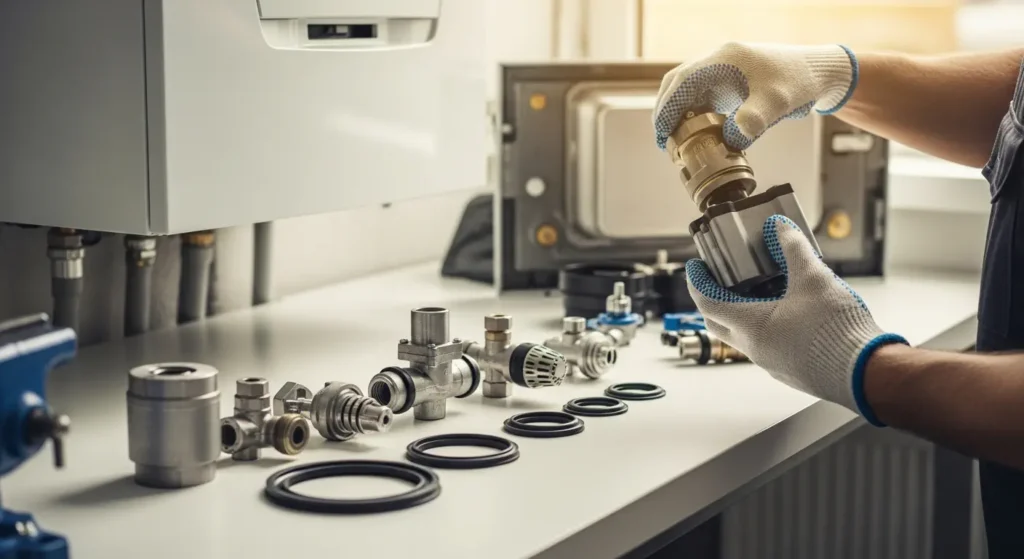
Small parts inside a boiler naturally wear out over time. Waiting too long to replace them can cause bigger damage.
Parts that may need replacement include:
- Pumps
- Valves
- Thermostats
- Seals
Early replacement is always cheaper and safer than waiting for a full breakdown.
11. Use a Smart Thermostat
A smart thermostat helps control heating more efficiently. It learns your routine and adjusts temperature automatically.
Benefits include:
- Less energy waste
- Reduced boiler workload
- Better temperature control
- Longer system life
Because the boiler runs more smoothly, it experiences less stress over time.
12. Protect Your Boiler in Cold Weather
Winter is a risky time for boilers and pipes. Frozen pipes can cause serious damage if not protected.
To stay safe:
- Keep heating on low during freezing weather
- Insulate exposed pipes
- Check system regularly in cold months
Simple winter care can prevent expensive emergency repairs.
When to Call a Professional
Sometimes, DIY checks are not enough. If your boiler is losing pressure, making noise, or showing errors, it is best to get expert help.
A qualified engineer can diagnose problems safely and carry out proper repairs before damage gets worse.
For reliable help, always choose a trusted professional boiler repair service that understands heating systems properly.
Final Thoughts
With proper care, a boiler can last a lifetime. Some simple tasks, such as frequent pressure inspections, radiator bleeding, and yearly upkeep, can save you a lot in the long run. You don’t even need to be especially tech savvy to do these maintenance activities, you can just be proactive.
When a boiler is taken care of, it will last much longer, and continuously care for the home.