Winter is the time of year when your boiler works the hardest. With temperatures dropping and heating systems running for longer hours, even a small issue can turn into a major problem if you don’t take care of your boiler properly. No one wants to wake up to a cold house, no hot water, or a boiler that refuses to turn on during freezing weather. The good news is that with simple winter maintenance steps, you can keep your boiler running smoothly and reduce the risk of unexpected breakdowns.
This guide will walk you through easy and practical winter boiler maintenance tips that every homeowner should follow. These steps help improve efficiency, extend the life of your boiler, and ensure your home stays warm and comfortable throughout winter.
1. Book an Annual Boiler Service
One of the most important things you can do before winter begins is to book a professional boiler service. A Gas Safe registered engineer will check all the key components, clean internal parts, and make sure your boiler is working safely.
A yearly service helps:
- Detect hidden problems before they cause a breakdown
- Improve energy efficiency
- Reduce heating bills
- Extend the lifespan of your boiler
Even the most reliable boilers lose performance over time. A simple yearly inspection can prevent many winter emergencies.
2. Check the Boiler Pressure Regularly
Boiler pressure plays a big role in how well your heating system works. During winter, it’s common for boiler pressure to drop due to higher usage.
Most boilers should have a pressure level between 1 and 2 bars when cold. If the pressure is too low, your radiators may not heat up properly or your boiler may shut down.
How to check and top up pressure
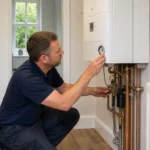
- Look at the pressure gauge on the boiler panel
- If it’s below 1 bar, use the filling loop to add water slowly
- Only increase the pressure to around 1.5 bars
- Make sure all valves are tightened afterwards
If pressure keeps dropping regularly, there might be a leak somewhere in the system, and a professional needs to check it.
3. Bleed Your Radiators
Cold spots in radiators are a common problem during winter. They usually happen because air gets trapped inside the heating system. When air builds up in radiators, they won’t heat evenly, which forces your boiler to work harder.
How to bleed radiators
- Turn off your heating.
- Use a radiator key to slowly open the bleed valve.
- When you hear hissing, that’s air escaping.
- Once water starts to flow steadily, close the valve.
- Turn your heating back on and check the temperature.
Bleeding radiators is a simple, safe job that can greatly improve the efficiency of your heating.
4. Insulate Your Pipes to Prevent Freezing
One of the biggest winter boiler problems is a frozen condensate pipe. This external pipe carries waste water from your boiler to a drain outside. During freezing temperatures, the water inside can turn to ice, causing a blockage. When this happens, your boiler will likely shut down.
How to protect pipes
- Use foam pipe insulation (lagging)
- Add extra insulation to exposed outdoor pipes
- Check pipes after very cold nights
- Pour warm (not boiling) water if freezing occurs
Frozen pipes can stop your heating at the worst possible time, so insulation is essential.
5. Check for Leaks Around Your Boiler
Small leaks often go unnoticed until they cause bigger problems. Winter is especially stressful on pipe joints and seals. You should regularly inspect your boiler and surrounding pipework for any signs of dampness or water pooling.
Typical leak signs include:
- Small wet patches under the boiler
- Rust marks on pipes
- Low boiler pressure
- Strange noises
If you find even a small leak, switch off your boiler and call a professional to repair it before winter gets colder.
6. Test Your Thermostat and Controls
Your thermostat helps regulate temperature and ensures your boiler runs efficiently. If it’s not working correctly, your home may feel too cold or too hot, and your boiler may run when it doesn’t need to.
Thermostat checks
- Make sure the batteries are fresh
- Check temperature settings
- Avoid placing the thermostat near radiators or windows
- Consider upgrading to a programmable or smart thermostat
Smart thermostats can save energy by learning your routine and adjusting the heating automatically.
7. Keep the Area Around Your Boiler Clear
Boilers need proper airflow to run safely and efficiently. Many people store boxes, bags, or cleaning items around their boiler during winter. This isn’t safe.
Always keep at least 30 centimetres of clear space around your boiler. Make sure flues and vents are not blocked, as blocked airflow can cause the boiler to overheat or shut down.
8. Listen for Strange Noises
A healthy boiler runs smoothly and quietly. If you hear noises like banging, whistling, gurgling, or loud humming, it may indicate a problem.
Common causes of boiler noises:
- Limescale buildup in the heat exchanger
- Air trapped in the system
- Low water pressure
- A failing pump
- Sludge in the radiators
Strange noises shouldn’t be ignored. If bleeding radiators or checking pressure doesn’t help, call a qualified heating engineer.
9. Run Your Heating Regularly, Even in Early Winter
If you only switch on your heating when it gets very cold, your boiler can become stiff from long periods of inactivity. Running your boiler for 10–15 minutes every few days keeps pumps, valves, and internal parts moving properly.
This small step helps prevent:
- Stuck valves
- Pump failures
- Pressure issues
Regular use, even at a low setting, is great for preventing winter breakdowns.
10. Check the Pilot Light or Ignition
Modern boilers use electronic ignition, but older models may still have a pilot light. If the pilot light keeps going out or the boiler fails to ignite, there could be:
- A faulty thermocouple
- Low gas pressure
- A draught blowing out the flame
- A blocked burner
Ignition problems should always be handled by a professional. Never open the boiler case yourself.
11. Keep an Eye on Energy Bills
If your energy bills suddenly increase in winter without a clear reason, it may be a sign that your boiler is not running efficiently. Sludge buildup, poor heating controls, or failing components can make the system use more gas.
High bills often mean it’s time for maintenance or a system check.
12. Call a Professional When Needed
Even though many winter boiler maintenance tasks are simple, some issues are best handled by a certified engineer. Boilers contain gas lines, electrical components, and heat exchangers that require expert inspection.
If your boiler keeps switching off, makes loud noises, leaks, or doesn’t provide consistent heat, you should consult a heating professional. Many homeowners choose trusted local services such as Boiler Repair Stoke-On-Trent to handle more complex problems safely.
13. Consider a Boiler Upgrade if Yours Is Old
If your boiler is more than 12–15 years old, you may start facing more breakdowns during winter. Older boilers lose efficiency, need more repairs, and cost more to run.
A modern A-rated boiler provides:
- Better energy efficiency
- Faster heating
- Lower bills
- Better performance in cold weather
Upgrading before winter can save you big repair costs later.
Final Thoughts
Winter can be tough on your boiler, but with simple and regular maintenance, you can avoid most breakdowns. Checking pressure, bleeding radiators, insulating pipes, servicing your boiler, and keeping the system clean can help it run smoothly even in harsh weather.
A well-maintained boiler not only keeps your home warm and cosy but also reduces energy bills and improves safety. Whether you’re preparing for the cold season or already in the middle of winter, these easy tips will help keep your boiler reliable, efficient, and ready for the months ahead.