Your boiler is one of the hardest-working appliances in your home, especially during autumn and winter. It heats your water, warms your radiators, and keeps your home comfortable. But when your boiler develops faults, even small ones, it can have a huge impact on your heating bills. Many homeowners don’t realise that a faulty boiler often uses far more energy than a healthy one, pushing energy costs higher week after week.
In this guide, we’ll break down how a faulty boiler directly increases your energy bills, the signs you should watch for, and the steps you can take to fix the problem safely. Whether your radiators feel lukewarm, your boiler keeps switching off, or your energy bills are rising without explanation, understanding these issues will help you take control of your heating system.
How a Faulty Boiler Increases Your Heating Costs
A healthy, efficient boiler burns fuel cleanly and controls heat output properly. When something goes wrong inside the system—whether it’s pressure issues, air in the pipes, failing components, or blocked parts—the boiler starts using more gas to achieve the same level of heat. Over time, this leads to noticeably higher monthly energy bills.
Let’s look at the main ways boiler faults waste energy and cost you money.
1. Reduced Efficiency Causes Higher Fuel Usage
A boiler becomes inefficient when it struggles to heat water or push hot water around the heating system. This means it has to run for longer periods and burn more gas to reach the temperature you’ve set.
Common causes of reduced efficiency include:
- Limescale buildup in the heat exchanger
- Sludge in the radiators
- Worn-out parts, such as pumps and valves
- Old, outdated boiler models with low energy ratings
When your boiler can’t heat water quickly or effectively, it compensates by working harder. This directly increases gas usage, which appears as higher bills.
2. Low Pressure Makes Your Boiler Work Harder
Boilers need good pressure to move hot water through your radiators and taps. When the pressure drops below 1 bar, the system becomes weak and inefficient.
Signs of low pressure include:
- Radiators not heating fully
- Boiler switching off
- Little or no hot water
- Slower heating times
Most boilers will still run on low pressure, but they run poorly. The system burns more fuel while delivering less heat, increasing your heating costs without you realising it.
3. Faulty Thermostat Leads to Overheating or Excessive Use
Your thermostat is the control centre of your heating system. If it’s inaccurate, faulty, or placed in the wrong location, it can cause your boiler to run when it doesn’t need to. Sometimes a thermostat will fail to recognise the room temperature correctly, causing your boiler to:
- Stay on for too long
- Heat your home higher than needed
- Trigger frequent heating cycles
All of these lead to increased gas usage. A faulty thermostat is a simple problem, but one that can quickly add £10–£40 extra per month on energy bills.
4. Air in the System Reduces Heat Output
Air trapped in radiators or pipes prevents hot water from circulating properly. When radiators have cold patches at the top or stay barely warm, the boiler must run for longer to heat the home.
You might notice:
- Cold spots on radiators
- Gurgling sounds from pipes
- Slower room heating
- Boiler cycling more frequently
Bleeding radiators is a simple fix that instantly improves efficiency and reduces energy usage.
5. Blocked or Frozen Condensate Pipe Causes Shutdowns
A blocked condensate pipe, especially during winter, stops the boiler from working properly. Even partial blockages force the boiler to shut down and restart repeatedly. This on-off cycle uses far more energy than a steady, stable run.
If your boiler keeps displaying error codes or stops working after cold nights, a frozen or blocked pipe might be the reason.
6. Old Boilers Burn More Fuel
Older boilers—especially those over 12 years old—can be as low as 60–70% efficient. This means 30–40% of the fuel is wasted. Modern A-rated boilers are over 90% efficient. If your boiler is outdated, even in perfect condition, you may be paying far more for heating than necessary.
7. Leaks and Dripping Components Reduce Performance
Leaks in the boiler or pipework reduce pressure, overwork the pump, and weaken the system. Even minor leaks make the boiler burn more fuel and run continuously to maintain temperature. A dripping boiler is never normal and should be checked immediately.
Signs Your Boiler Is Increasing Your Heating Costs
You might be paying more for your heating without realising your boiler is at fault. Here are the most common warning signs:
- Your energy bills are rising but usage hasn’t changed
- Radiators feel warm at the bottom but cold at the top
- The boiler takes longer to heat water
- You hear banging, whistling, or gurgling noises
- Boiler pressure keeps dropping
- Rooms take longer to warm up
- Boiler turns off unexpectedly
- Pilot light keeps going out
- Boiler constantly needs resetting
If you notice one or more of these symptoms, your boiler may be wasting energy.
How to Fix a Faulty Boiler Safely and Reduce Heating Costs
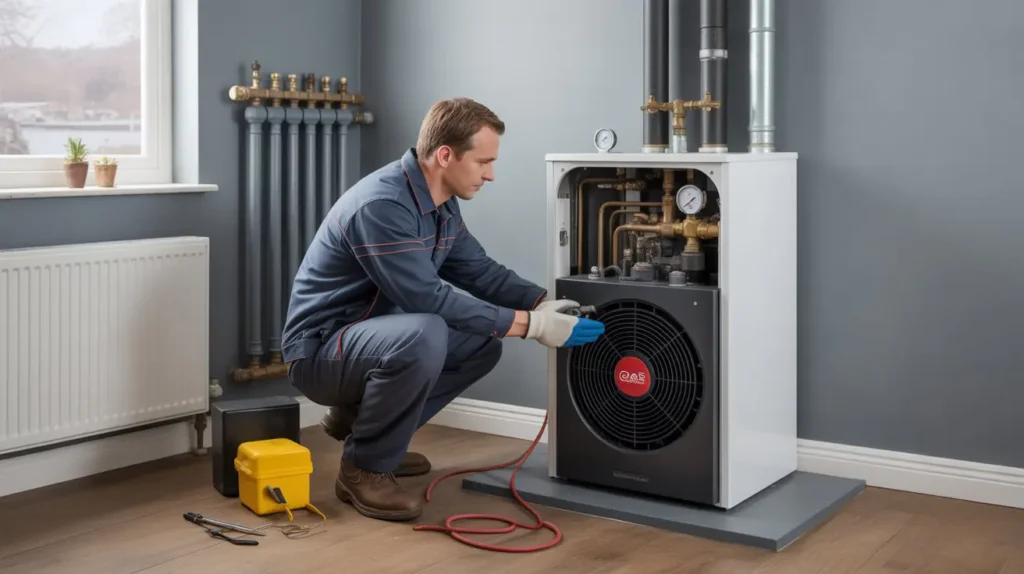
The good news is that most boiler efficiency issues can be fixed with simple steps. Some tasks you can do yourself, while others need a qualified Gas Safe engineer.
1. Check and Correct Boiler Pressure
Look at the pressure gauge on your boiler. The ideal reading when the system is cold is around 1–1.5 bars. If it’s below this, you need to top it up using the filling loop.
Fixing pressure helps your boiler run smoothly and prevents wasted gas.
2. Bleed Radiators to Remove Air
Bleeding radiators is one of the quickest ways to increase heating efficiency.
Steps:
- Turn off the heating
- Use a radiator key
- Open the bleed valve slowly
- Release air until water appears
- Close the valve securely
Once radiators are fully warm again, your boiler won’t need to work as hard.
3. Insulate or Clear the Condensate Pipe
If your boiler stops working in cold weather, pour warm water over the external pipe to thaw it. Then insulate it to prevent future freezing. This stops the boiler from repeating energy-draining shutdown cycles.
4. Clean or Replace the Thermostat
If your thermostat is old or inaccurate, consider upgrading to a modern programmable or smart thermostat. This lets you control heating more efficiently and prevents your boiler from running unnecessarily.
5. Book a Professional Boiler Service
A yearly boiler service is essential for keeping your energy bills under control. A Gas Safe engineer will:
- Clean the burner and heat exchanger
- Check gas pressure
- Remove sludge or debris
- Inspect all electrical components
- Test safety systems
- Improve overall efficiency
A serviced boiler can run up to 15% more efficiently, saving money throughout winter.
6. Power Flush the Heating System
Sludge buildup inside radiators is one of the biggest causes of inefficiency. A professional power flush clears rust, dirt, and debris so water can flow properly again.If your radiators are cold at the bottom or unevenly warm, a power flush may be needed.
7. Consider Replacing an Old Boiler
If your boiler is frequently breaking down, making loud noises, or struggling to heat your home, replacing it might be cheaper in the long run. A modern boiler uses far less energy and delivers much faster heat.
A good engineer or local service provider—such as those specialising in boiler repair stoke—can tell you whether a repair or replacement is best.
Final Thoughts
A faulty boiler doesn’t just cause inconvenience—it can quietly increase your heating costs every month. Even small issues like trapped air, low pressure, or a faulty thermostat force your boiler to use more gas to do the same job. By checking your system regularly, keeping your radiators in good condition, and booking the best boiler service , you can keep your heating costs down and ensure your home stays warm and comfortable.
If you notice rising bills, strange noises, or slow heating, it’s worth acting quickly. Fixing boiler problems early saves money, improves efficiency, and prevents bigger issues during winter.