A plumbing emergency can happen without warning. A burst pipe, leaking tap or overflowing toilet can quickly cause damage if the water is not stopped. Knowing how to shut off your water in an emergency is an essential skill for any homeowner or tenant.
Many people only think about the stopcock when something goes wrong. At that point, stress is high and water may already be spreading through the property. This guide explains what to do in simple, clear steps so you can act quickly and protect your home.
Why Acting Quickly Matters
Water damage can increase within minutes. Even a small leak can affect flooring, walls and fittings if left unattended.
Fast action helps reduce repair costs and limits damage until the problem is properly fixed. This is particularly important in older properties, where plumbing faults are more common, as explained in our guide on Common Plumbing Problems in Stoke-on-Trent Homes.
What Is Considered a Plumbing Emergency
A plumbing emergency is any situation where water cannot be controlled or is actively causing damage.
This includes burst pipes, water leaking through ceilings, toilets that continue to overflow, or serious leaks under sinks or appliances. If you are unsure, it is always safer to treat the issue as an emergency.
Where to Find the Main Water Stopcock
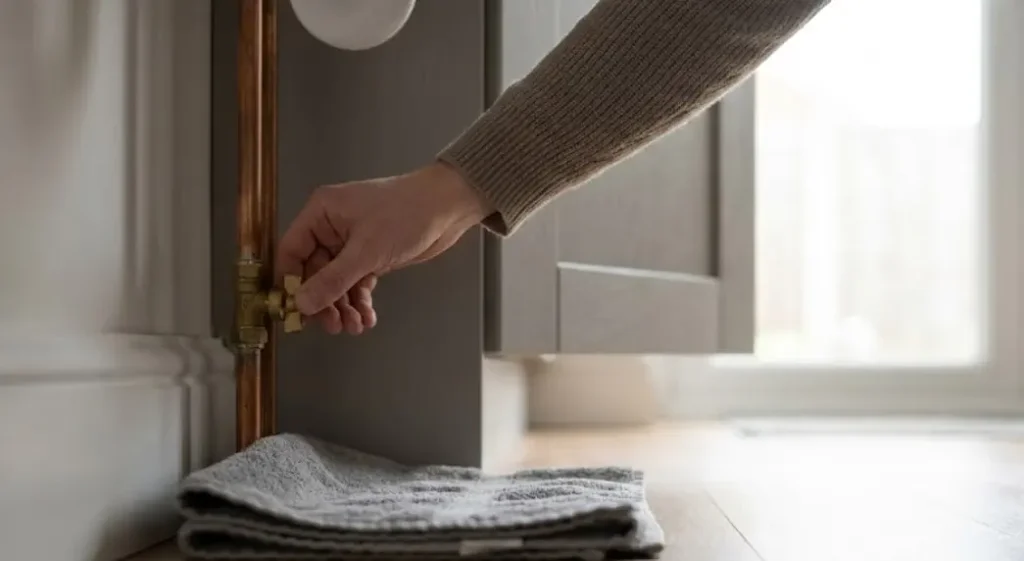
The main water stopcock controls the water supply to your home. Its position depends on the type and age of the property.
In most UK homes, it is located under the kitchen sink or inside a cupboard near the front door. In some properties, it may be under the stairs or in a cellar. Flats may have a shared or external stopcock.
It is strongly recommended that you locate it in advance and make sure everyone in the household knows where it is.
How to Shut Off the Water Supply
Turn the stopcock clockwise, or to the right, until it will not turn any further. This closes the water supply coming into the property.
After turning it off, open a cold tap to check that the water has stopped flowing. You should also open other taps to release any remaining water in the pipes, which helps reduce pressure.
If the Stopcock Will Not Turn
Older stopcocks can become stiff or corroded over time. If the valve does not turn easily, do not force it, as this could cause damage.
In this situation, it is best to seek professional assistance. A damaged stopcock can quickly make the problem worse and lead to more extensive water damage. Contacting an emergency plumber in Stoke-on-Trent is the safest option in this case.
Using the External Shut-Off Valve
If you cannot access the internal stopcock, an external shut-off valve may be used.
This valve is usually located near the front boundary of the property or under a small cover close to the pavement. A stop-valve key is often needed to move it.
This option should be used only when the internal stopcock is inaccessible or faulty.
Shutting Off Water to Individual Fixtures
Some plumbing issues are limited to a single fixture or appliance.
Many sinks, toilets, washing machines and dishwashers have isolation valves that allow water to be shut off locally. This can help manage smaller leaks without turning off the supply to the whole house.
If the leak continues or worsens, the main water supply should be turned off immediately.
What to Do Once the Water Is Off
After shutting off the water, contain any visible water and keep it away from electrical fittings. If there is a risk of water reaching sockets or switches, turning off the electricity may be necessary.
Inspect the source of the issue if it is safe to do so, but avoid turning the water back on until repairs are completed.
Preventing Future Water Emergencies
Regular checks can greatly reduce the risk of sudden water problems.
Make sure your stopcock works properly, insulate pipes during colder months and fix minor leaks early. These small steps can prevent more serious issues from developing.
Final Thoughts
Knowing how to shut off your water in an emergency can save your home from costly damage and unnecessary stress. It only takes a few moments to locate your stopcock, but that knowledge can make all the difference during a plumbing emergency.
Take the time now to prepare, and you’ll be able to act quickly and confidently if a problem ever occurs.