


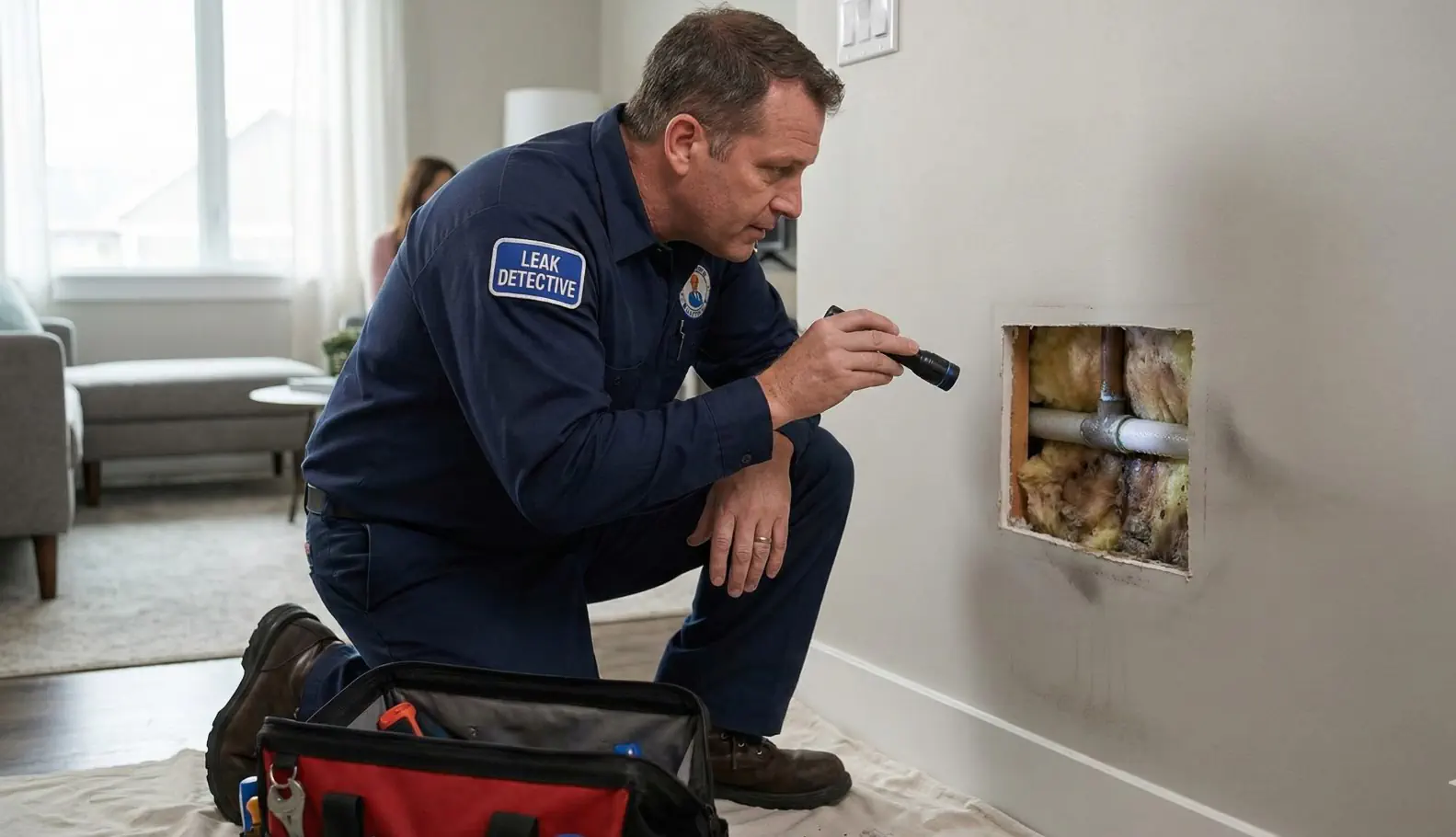
Hidden leaks in your home might seem harmless at first, but over time, they can lead to serious problems. From rising water bills to structural damage, ignoring small leaks can cost you a lot. The good news is that with careful observation and a few simple tools, you can detect these leaks early and prevent major damage. In this article, we will guide you through practical ways to spot hidden leaks, why it’s important, and how professional help can make a difference.
Why Hidden Leaks Are a Big Problem
Many homeowners don’t realise they have leaks until it’s too late. Hidden leaks often occur in places you can’t see easily, like behind walls, under floors, or inside your ceiling. These leaks may seem small, but they can cause:
- Structural damage: Water can weaken walls, floors, and ceilings over time.
- Mould and mildew growth: Even minor leaks can create damp conditions that encourage mould, which can affect health.
- Higher water bills: Continuous leaks waste water, which adds up to increased utility costs.
- Appliance damage: Water leaks near appliances like boilers, washing machines, or dishwashers can shorten their lifespan.
Detecting leaks early is essential to prevent these problems. The sooner you find them, the easier and cheaper it is to fix.
Signs You Might Have a Hidden Leak
You don’t always need fancy equipment to find leaks. Here are some common warning signs that a hidden leak may be present:
1. Unexplained Increase in Water Bills
If your water bills suddenly rise without a change in usage, it’s often a sign of a leak. Even a small leak that drips constantly can waste hundreds of litres of water each month. Check your water meter regularly. If it keeps moving when no water is being used, this could indicate a hidden leak.
2. Damp or Discoloured Walls and Ceilings
Water stains or patches on walls or ceilings are a clear indicator. Look out for peeling paint, warped wallpaper, or soft spots. These signs often point to water escaping from pipes inside walls or ceilings.
3. Strange Sounds
Listening carefully in quiet areas of your home can reveal leaks. If you hear dripping, hissing, or running water when taps are off, it may be a hidden leak. Pipes can sometimes leak behind walls or under floors, creating subtle but noticeable sounds.
4. Mould or Mildew Growth
Mould and mildew are often the first visible signs of a hidden leak. They thrive in damp areas and can appear on walls, ceilings, floors, or even under carpets. If you notice a musty smell in certain areas, it could indicate water accumulation behind surfaces.
5. Foundation Cracks or Wet Floors
Leaks from underground pipes can affect your home’s foundation. If you notice cracks in the foundation or wet spots on your floors, it may be caused by water escaping from hidden pipes.
Tools and Methods to Detect Hidden Leaks
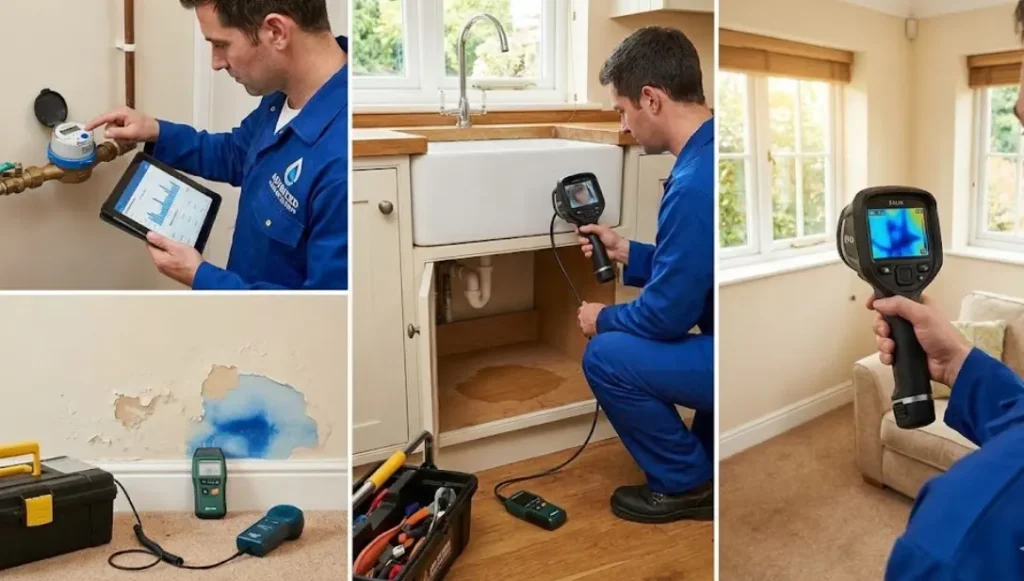
While visual inspection is helpful, some leaks require more advanced detection methods. Here are practical ways to identify leaks before they cause serious damage:
1. Monitor Your Water Meter
Your water meter is a simple but effective tool. Here’s how to use it:
- Ensure no water is being used inside or outside your home.
- Record the meter reading.
- Check it again after a few hours.
If the reading has changed, you may have a leak. This method works well for both small and large leaks.
2. Check All Visible Pipes
Inspect the pipes under sinks, behind appliances, and around your boiler. Look for signs of moisture, corrosion, or puddles. Even minor dampness around pipe joints can indicate a slow leak.
3. Use Dye or Food Colouring in Toilets
Toilet leaks can be hidden and hard to notice. Add a few drops of food colouring into the tank and wait 15–20 minutes. If the colour appears in the toilet bowl without flushing, there is a leak that needs fixing.
4. Thermal Imaging Cameras
For leaks inside walls or ceilings, thermal imaging can be very effective. These cameras detect temperature differences caused by water, helping locate leaks without damaging walls. Many plumbers use this method for precise detection.
5. Acoustic Leak Detectors
Professional plumbers often use acoustic leak detectors, which amplify sounds of water escaping pipes. This is particularly useful for underground or hidden leaks that are impossible to see.
Common Areas Where Hidden Leaks Occur
Knowing where leaks are likely to happen can help you stay vigilant. Some common spots include:
- Under sinks and behind cabinets – Pipe joints can wear out over time.
- Behind toilets – Leaks often occur at the base or tank connections.
- Boiler and water heater connections – Corrosion can cause slow leaks.
- Under floors and in basements – Hidden pipes or water mains can leak into flooring.
- Roof and attic areas – Leaks from roof damage can drip down walls or ceilings.
Regular inspection of these areas can help detect issues before they escalate.
Preventive Measures to Avoid Hidden Leaks
Detecting leaks early is important, but prevention is even better. Here are some tips to reduce the risk:
- Regular Maintenance: Schedule annual checks for your plumbing system. Look for signs of wear and tear.
- Insulate Pipes: Especially in colder months, insulating pipes prevents freezing and bursting.
- Use Quality Materials: When installing or replacing pipes, use durable materials that last longer.
- Check Appliances: Inspect dishwashers, washing machines, and boilers for leaks or corrosion.
- Educate Household Members: Make sure everyone knows how to spot potential leaks and report them promptly.
When to Call a Professional Plumber
While DIY detection is useful, some leaks are too hidden or complex to manage on your own. Professional plumbers have the tools, experience, and knowledge to locate leaks quickly and fix them safely. Here are situations where you should call a plumber:
- Persistent damp spots that don’t go away.
- Rapidly rising water bills despite no increase in usage.
- Leaks behind walls, under floors, or in ceilings.
- Leaks near gas appliances or boilers (these require immediate attention).
Hiring a Stoke On Trent plumber ensures the problem is identified and repaired efficiently. Professionals also prevent further damage and save you money in the long run.
Benefits of Detecting Hidden Leaks Early
Taking action early has many benefits:
- Saves money: Fixing a small leak is cheaper than repairing structural damage later.
- Protects your home: Prevents mould, water damage, and foundation issues.
- Reduces water waste: Conserving water helps the environment and lowers bills.
- Extends the life of appliances: Pipes, boilers, and other systems last longer without water damage.
Early detection is key to a safe and cost-effective home.
Conclusion
Hidden leaks may seem minor, but they can lead to serious problems if ignored. By paying attention to water bills, damp signs, strange sounds, and using tools like water meters or thermal cameras, you can detect leaks early. Regular maintenance and preventive measures help protect your home and reduce costs.If you suspect a hidden leak and need fast, professional help, don’t wait for the damage to get worse. Contact a trusted emergency plumber Stoke on Trent to find and fix the issue quickly, safely, and with minimal disruption to your home.