A gas safety inspection sounds serious — and in a way, it is. Gas appliances that haven’t been checked properly can be dangerous. But the inspection itself is straightforward, and it usually takes less time than people expect.
Whether you’re a homeowner wanting peace of mind, or a landlord in Stoke-on-Trent who needs a CP12 certificate before the legal deadline, this post tells you exactly what happens from the moment I arrive to the moment I hand over your paperwork.
Why Gas Safety Inspections Matter
Gas is incredibly safe when it’s managed properly. The problems start when appliances aren’t serviced, when flues get blocked, or when old equipment starts to fail without anyone noticing. Carbon monoxide is the big one — it’s colourless, odourless, and it kills people every year in the UK.
A gas safety inspection is how we catch those problems before they become dangerous. It’s not a tick-box exercise. When I do one, I’m genuinely looking at how your appliances are working and whether they’re safe for you and your family to use.
I’ve been into homes where the boiler looked absolutely fine from the outside but the flue was partially blocked. The family had no idea. That’s exactly why this inspection exists — not to cause hassle, but to catch the things you can’t see.
— Usman, BrightBurn Solutions – Boiler & Gas Services
Who Needs a Gas Safety Inspection?
Two main groups of people contact me for this:
Homeowners — Usually once a year as part of their annual boiler service, or when they’ve just moved into a new property and want to know everything’s safe.
Landlords — By law, if you rent out a property in the UK, you must have a gas safety check carried out every 12 months by a qualified, Gas Safe registered engineer. You also need to give your tenants a copy of the certificate (called a CP12) within 28 days of the inspection. If you don’t, the penalties are serious.
If you’re a landlord in Stoke-on-Trent looking for a gas safety certificate, I handle all the paperwork digitally and send it over the same day in most cases.
Step by Step: What I Actually Do During an Inspection
Here’s the honest walkthrough. Nothing is hidden, nothing is more complicated than it needs to be.
I arrive and introduce myself — ID shown at the door
Before I even step inside, I show my Gas Safe ID card. You can — and should — check this. Every Gas Safe registered engineer carries one. You can also verify my registration number (575239) on the Gas Safe Register website if you want to double-check. I won’t take that personally. It’s the right thing to do.
I ask about the appliances in the property
I’ll ask how many gas appliances you have — usually a boiler, possibly a gas fire, a gas hob, or a gas cooker. I want to know if anything has been playing up recently, making odd noises, or if you’ve noticed any smells. This helps me know where to pay extra attention.
I check the gas meter and pipework
I start at the gas meter and work my way through the property’s gas supply pipework. I’m looking for signs of corrosion, poor connections, or anything that suggests the pipework has been disturbed or damaged. This part is often done quietly in the background while we talk.
I inspect each gas appliance
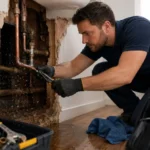
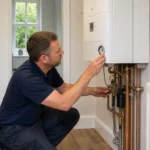
For every gas appliance in the property, I carry out a visual inspection first. I’m checking for obvious damage, signs of corrosion, correct installation, and whether the appliance has adequate ventilation around it. Then I move to the operational checks — I fire the appliance up and check it’s working as it should.
I test the flue and ventilation
This is one of the most important parts. The flue is what takes the combustion gases — including carbon monoxide — safely out of your property. If the flue is blocked, damaged, or incorrectly positioned, those gases have nowhere to go. I use a flue gas analyser to check that combustion products are venting correctly. It only takes a few minutes but it’s critical.
I check gas pressure and flow
I check that the gas pressure at each appliance is within the manufacturer’s specified range. If the pressure is too high or too low, the appliance won’t burn correctly — and in some cases, it can be unsafe. This is something you’d never know just by looking at the boiler.
I carry out a tightness test on the whole system
A tightness test checks whether there are any gas leaks anywhere in the system. I isolate the appliances and apply a slight pressure to the pipework, then measure whether that pressure holds. If it drops, there’s a leak somewhere and I investigate further before leaving. I won’t sign off on an unsafe system.
I complete and sign the paperwork
Once I’ve finished all the checks, I complete the Gas Safety Record (the CP12 certificate). This lists every appliance I’ve inspected, the results of each check, and whether the appliances are classified as “safe”, “at risk”, or “immediately dangerous”. You get a copy on the day — I send it digitally, so there’s no waiting around.
What Does “Immediately Dangerous” Mean?
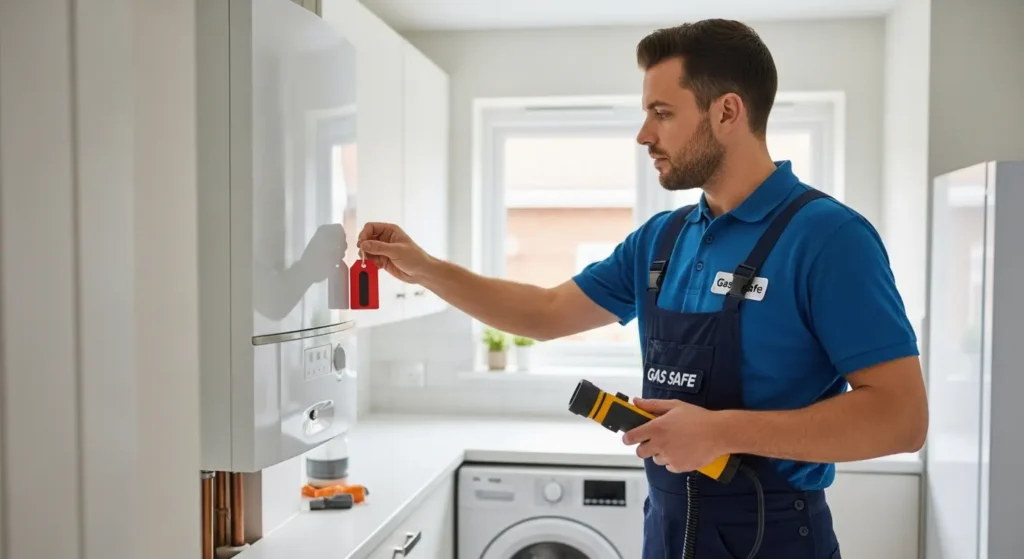
If I find an appliance that’s immediately dangerous — meaning it poses a risk of carbon monoxide poisoning, fire, or explosion — I’ll tell you straight away. I’ll label the appliance and disconnect it from the gas supply. I know that’s not what anyone wants to hear, but it’s the only responsible thing to do.
I’ll always explain exactly what the problem is, what the options are, and what it will take to get it fixed. I won’t leave you confused or in the dark.
Important: An “at risk” appliance is different from “immediately dangerous.” At risk means the appliance has a fault that needs attention but doesn’t pose an immediate threat. I’ll advise you on what needs to be done and give you a reasonable timeframe.
How Long Does a Gas Safety Inspection Take?
For a typical property with one boiler and no other gas appliances, the inspection takes around 30 to 45 minutes. If the property has a gas fire, gas hob, and back boiler as well, allow closer to an hour.
I do a thorough job. I don’t rush. But I also don’t hang around longer than I need to — I know you’ve got things to get on with.
What Do You Get at the End?
- A completed Gas Safety Record (CP12 certificate) — sent digitally the same day
- A clear explanation of the condition of every appliance checked
- Honest advice on anything that needs attention, with no pressure to buy services you don’t need
- A record that your Gas Safe engineer’s registration number is on the certificate (mine is 575239)
- Peace of mind that the property is safe to occupy
What’s the Difference Between a Gas Safety Inspection and a Boiler Service?
This comes up a lot. They’re not the same thing, but they’re often done together.
A gas safety inspection checks that your appliances are safe to use. It’s a pass or fail check against safety criteria.
A boiler service goes deeper — it involves cleaning internal components, checking for wear and tear, and making sure the boiler is running as efficiently as it should. A service helps extend the life of your boiler and keeps it running economically.
Many homeowners in Stoke-on-Trent book both at the same time. It saves time, and it means I only need to visit once. If you’d like to understand more about what a service involves, I’ve written a separate post on what engineers check during a boiler service.
Can I Be There During the Inspection?
Yes, absolutely. In fact I prefer it. If you’re in the property, I can talk you through what I’m doing and explain anything I find as I go. You can ask questions. That’s how it should work.
If you’re a landlord and can’t be there in person, that’s also fine — I can liaise with your tenant directly and send you the paperwork once the inspection is done.
I’ve got 193 Google reviews, and the ones I’m most proud of are from people who say they actually understood what I did and why. That matters to me more than just getting in and out quickly.
— Usman, BrightBurn Solutions – Boiler & Gas Services
Do I Need a Gas Safety Inspection Every Year?
For landlords — yes, without exception. The law requires a gas safety check every 12 months. There are no exemptions.
For homeowners — it’s not a legal requirement, but it’s strongly recommended. Most boiler manufacturers also include annual servicing as a condition of the warranty, so skipping it could invalidate your cover.
My honest recommendation: get it done annually alongside your boiler service. It’s not expensive, and the cost of not doing it — a gas leak, a carbon monoxide incident, or a void warranty — is far higher.
Frequently Asked Questions
How much does a gas safety inspection cost in Stoke-on-Trent?
The cost varies depending on how many appliances are in the property. For a straightforward one-appliance inspection with a CP12 certificate, you can see my pricing at brightburnsolutions.co.uk/pricing. Quotes are confirmed in writing before any work begins.
How do I know if an engineer is actually Gas Safe registered?
Ask to see their Gas Safe ID card at the door. You can also search the Gas Safe Register online using their registration number. Mine is 575239. Always do this — it takes 30 seconds and it matters.
What if my boiler fails the inspection?
I’ll explain exactly what the fault is and what the options are — whether that’s a repair, a replacement part, or in some cases, a new boiler. I’ll never recommend replacement unless it’s genuinely the right call. You can find out more on the boiler repair page.
Do you cover areas outside Stoke-on-Trent?
Yes. As a certified gas engineer Stoke on Trent and the wider area, I cover Newcastle-under-Lyme, Crewe, Stafford, Leek, Cheadle, Uttoxeter, Congleton, Sandbach, stone and nearby areas. If you’re not sure whether I cover your area, just call or message — I’ll tell you straight.
How quickly can you book an inspection?
I usually have availability within a few days for standard inspections. For urgent situations — such as a landlord facing a legal deadline — get in touch and I’ll do my best to accommodate you. WhatsApp is often the quickest way to get a fast response.