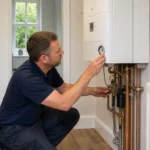
If your boiler suddenly stops heating your home properly, low pressure could be the reason. This is one of the most common boiler problems homeowners deal with, especially during winter when the heating stays on for longer hours.
The good thing is that repressurising a boiler is usually simple. In many cases, you can fix the problem yourself in less than 10 minutes without needing special tools.At BrightBurn Solutions – Boiler & Gas Services, we regularly help homeowners with boiler pressure problems, and many people are surprised at how easy the process actually is once it’s explained properly. This guide will walk you through everything step by step using simple words and easy instructions.
What Does Boiler Pressure Actually Mean?
Your boiler uses water pressure to move hot water around your heating system. Without the correct pressure, the hot water cannot travel properly through the pipes and radiators in your home. When the pressure drops too low, the boiler may stop working correctly or completely shut down as a safety measure. Most modern boilers work best when the pressure stays somewhere between:
1 bar≤P≤2
For many homes, around 1.5 bar is considered the normal level when the heating is off. You can usually check the pressure by looking at the gauge on the front of the boiler. Some boilers use a dial with a needle, while newer models may show the pressure digitally on a screen.
Signs Your Boiler Pressure Is Too Low
A lot of people don’t notice the pressure problem immediately. They simply realise the heating doesn’t feel right anymore.
You may notice:
- Radiators staying cold at the top
- Hot water taking longer than normal
- Boiler fault codes appearing
- Heating switching itself off
- Pressure gauge below 1 bar
Sometimes the boiler may completely stop responding until the pressure is topped up again.
Why Boiler Pressure Drops
Boiler pressure can slowly reduce over time for different reasons. In some homes, it only happens once in a while. In others, it may happen more regularly.
One of the most common causes is bleeding radiators. When trapped air is released from the system, a little pressure escapes too. Small leaks around radiator valves, pipe joints, or the boiler itself can also slowly lower the pressure. These leaks are not always easy to spot straight away because they can be tiny. Older boilers sometimes lose pressure naturally because internal components wear down over time. Cold weather can also affect the system because the heating works harder during winter months. If the pressure drops once every few months, it’s usually not a major concern. But if you constantly need to top it up every few days, there is probably another problem that needs attention.
Is It Safe to Repressurise a Boiler Yourself?
Yes, in most cases it is perfectly safe for homeowners to repressurise their own boiler. Modern boilers are designed to make this process fairly simple. As long as you follow the instructions carefully and avoid overfilling the system, it’s normally a straightforward job. Still, there are situations where you should stop and call a professional heating engineer instead. For example, if you smell gas, notice water leaking heavily, or hear unusual banging sounds from the boiler, those problems should be inspected properly before doing anything else.
Before You Start
Before repressurising the boiler, switch the heating off and allow the system to cool down for a few minutes. This helps prevent inaccurate pressure readings and reduces the chance of damaging the system. You should also take a quick look underneath the boiler so you can find the filling loop.
What Is a Filling Loop?
The filling loop is the part that allows water to enter the heating system when the pressure is low. Most filling loops look like a small silver flexible hose connected underneath the boiler. You’ll normally see one or two small valves attached to it. Some boilers use black handles, while others use blue or silver controls. Older systems may use a removable filling key instead.
If you can’t find the filling loop straight away, don’t panic. Different boiler brands place them in slightly different positions.
How to Repressurise a Boiler Step by Step
Once you locate the filling loop, the process becomes much easier.
Start by checking the pressure gauge on the boiler. If the pressure is sitting below 1 bar, the system needs topping up.Now slowly open the filling loop valves. You may hear a quiet sound of water entering the system. This is completely normal. While the water enters the boiler, keep watching the pressure gauge carefully. The pressure should slowly begin to rise.The biggest mistake people make is opening the valves too quickly. That can cause the pressure to shoot up too fast.Once the gauge reaches around 1.5 bar, close both valves tightly.After that, switch the boiler back on and test the heating.In many cases, your radiators and hot water will return to normal almost immediately.
What Happens if You Add Too Much Pressure?
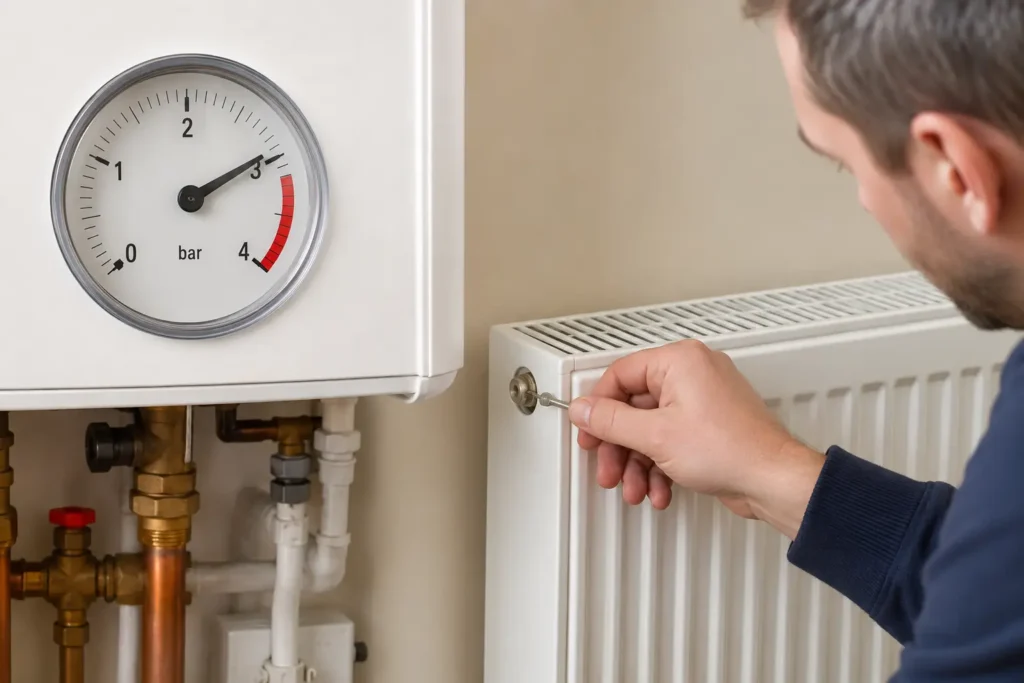
This happens quite often, especially if someone rushes the process.
If the pressure goes too high, the boiler may stop working properly again. Too much pressure can also place extra strain on internal parts.Normally, anything above 2.5 bar is considered too high for most systems.If this happens, you can usually reduce the pressure by bleeding a radiator slightly and allowing a small amount of water to escape.
After releasing some pressure, check the gauge again until it returns to the normal range.
Why Your Boiler Keeps Losing Pressure
If your boiler keeps losing pressure regularly, there is usually another issue somewhere in the system.
Some of the most common causes include:
- Small leaks in the pipework
- Faulty expansion vessel
- Damaged pressure relief valve
- Loose radiator connections
- Internal boiler faults
A healthy boiler system should not need constant repressurising.
If you are searching for a reliable boiler repair service near your area, it’s important to choose experienced heating engineers who can properly diagnose the root cause instead of only topping the pressure up again.
Common Mistakes Homeowners Make
Many boiler pressure problems become worse because of small mistakes during repressurising.
One common mistake is forgetting to close the filling loop valves completely. This can cause the pressure to continue rising after the boiler is switched back on.
Another mistake is repressurising the system while the boiler is still extremely hot. Hot systems can give inaccurate readings, making it easier to overfill.
Some homeowners also ignore repeated pressure drops for months. Unfortunately, small leaks often become larger and more expensive over time.
Can Low Boiler Pressure Damage the Boiler?
Low pressure itself usually won’t destroy the boiler immediately, but it can definitely create problems if ignored for too long. The heating system may work harder than normal, which can increase wear on internal components. Your home may also take much longer to warm up properly. Over time, constant pressure issues can reduce boiler efficiency and increase heating costs as well. That’s why it’s always best to deal with pressure problems early before they turn into bigger repairs.
How Often Should You Check Boiler Pressure?
Most homeowners never look at their boiler pressure unless something stops working. A better habit is checking the gauge once every month, especially during winter. It only takes a few seconds and can help you spot small problems early before they become expensive breakdowns.Regular boiler servicing also helps keep the entire heating system working safely and efficiently throughout the year.
When You Should Call a Heating Engineer
Sometimes repressurising the boiler fixes everything immediately. Other times, the problem keeps returning no matter what you do.
If your boiler loses pressure again shortly after topping it up, it’s time to get the system inspected properly.
You should also contact an engineer if:
- Water is leaking from the boiler
- Radiators stay cold after repressurising
- The boiler shows repeated fault codes
- Pressure rises too high constantly
- You cannot locate the filling loop
A trained engineer can safely test the system and find hidden problems that are difficult to spot yourself.
Final Thoughts
Learning how to repressurise a boiler is useful for every homeowner because low pressure is such a common heating issue.The process itself is normally very simple once you know where the filling loop is and how to watch the pressure gauge properly. The key thing is not to rush. Open the valves slowly, monitor the pressure carefully, and stop once the gauge reaches the correct level. If the pressure keeps dropping regularly though, there is likely another fault somewhere in the system that needs professional attention. For trusted boiler repairs, servicing, and heating support, contact BrightBurn Solutions – Boiler & Gas Services for reliable local help and expert advice.