Winter is when boilers take the most abuse. With cold weather and short days, heating is a constant process. If your system is older and poorly maintained, overworking will lead to problems. A winter failure is costly and very uncomfortable. Boiler failures are easy to maintain and prevent. Take the following into consideration to keep your home warm and reduce boiler failures.
Understand Your Boiler
Before anything else, it helps to know how your boiler works. Your boiler heats water for radiators and taps. There are a few types: combi boilers, system boilers, and regular boilers. Each type has slightly different maintenance needs. Knowing what type you have makes it easier to notice issues early.
Boilers have several important parts, such as the pressure valve, heat exchanger, and pump. If any of these parts are worn or blocked, your boiler may struggle in winter. Understanding your system will help you spot problems before they become serious.
Service Your Boiler
Regular servicing is one of the best ways to prevent winter breakdowns. A professional engineer can check for leaks, clean parts, test safety valves, and make sure your boiler is running efficiently.
It’s recommended to have your boiler serviced once a year, ideally before the cold weather begins. Waiting until winter can mean discovering problems when you need your heating most.
For professional help, local boiler specialists in Stoke-on-Trent can provide annual servicing and expert advice. If you also want guidance on finding trustworthy professionals, read our guide How to Choose a Reliable Plumber: Checklist for Homeowners .
Keep the Boiler Area Clean
Clutter around the boiler can result in safety hazards and reduced efficiency. Never block the vents and flues. Dust and grime can build up on the outside of the boiler. Cleaning dust from the pipes and other components will help the boiler function properly.
Check Boiler Pressure Regularly
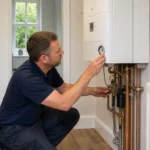
Boiler pressure is related to how water is heated and circulated within your home. Most boilers include a pressure gauge. When the system is cold, the pressure should typically be in the range of 1 to 2 bars.
When the pressure is too low, you may notice that your radiators heat unevenly or not at all. When the pressure is too high, leaks may develop, or the system may be damaged. You can change the pressure by using the filling loop to add or the drain valve to remove some water, but to be safe, read your boiler’s instructions or consult a professional.
Bleed Your Radiators
Air trapped inside radiators can reduce heating efficiency. Bleeding radiators is simple and can prevent cold spots.
Quick steps to bleed a radiator:
- Turn off the heating
- Use a radiator key to open the valve
- Let air escape until water flows
- Close the valve and check pressure
Doing this at the start of winter, and occasionally during the season, will help your boiler work less hard.
Insulate Your Pipes
Cold weather can freeze pipes, causing leaks or even bursts. Insulating your pipes is an easy and effective way to prevent damage.
- Use foam or rubber insulation for pipes in unheated areas like lofts, garages, or basements
- Leave a small trickle of water running through taps during very cold nights
- Keep doors open in unused rooms so warm air reaches the pipes
Insulated pipes help your boiler work safely and efficiently.
Use a Programmable Thermostat
A thermostat can reduce stress on your boiler and save energy. Setting your heating according to your schedule ensures your boiler only runs when needed.
You can:
- Lower the temperature while sleeping or away
- Raise it before you wake up or return home
- Use room-by-room controls if available
This keeps your home warm without overworking the boiler.
Use Quality Fuel
If your boiler runs on oil or gas, the quality of your fuel is important. Bad fuel can cause lags, deposits, and reduces the burner and boiler efficiency. Purchase fuel from a dependable supplier. Gas systems and associated problems are not for the owner to deal with. Always employ a certified engineer.
Watch for Warning Signs
An early intervention can secure your finances and stave off damage. Be on the lookout for disturbances that direct you to your problem early: noises that are out of the ordinary, pressure that changes suddenly, and your boiler leaking. Radiators that operate below the expected temperature can also indicate an issue. Contact an expert when you observe these signs.
Keep the Manual Handy
Your boiler manual contains important information on operation, maintenance, and emergency steps. Keep it accessible during winter. Knowing how to check pressure, reset the boiler, and contact engineers can save time and stress.
Consider a Boiler Upgrade
Older boilers are more prone to breakdowns and may not run efficiently. If your boiler is over 10–15 years old, consider replacing it with a modern energy-efficient model. New boilers save energy, reduce heating bills, and are less likely to fail in winter.
Plan for Emergencies
Although regular maintenance can prolong a boiler’s life, they can still be prone to failure. In such situations, be prepared. Store telephone numbers of engineers, st социале warm drinks and blankets, and learn how to safely turn boiler off in emergency.
Quick Winter Checklist
Only a few bullet points here for emphasis:
- Service the boiler before winter
- Bleed radiators and check pressure
- Insulate pipes in cold areas
- Watch for leaks, noises, or cold spots
- Keep emergency numbers ready
By following these steps, your boiler is more likely to run smoothly all winter. Regular care, simple checks, and a bit of preparation will reduce breakdowns and save you time, money, and stress. A well-maintained boiler is safer, more efficient, and keeps your home warm when you need it most.